

 by Positive
- The existing platform no longer meets business needs.
- The migration involves several systems and unclear dependencies.
- The internal team does not want to carry disruption and rollback risk alone.
07 · Controlled transition
Migrations: Change platforms without unnecessary business disruption.
We lead on-premises, cloud and platform migrations through dependency analysis, preparation, testing, transfer and validation. Every critical step has an owner and fallback plan.
Environment change becomes a controlled project, not a risky leap.
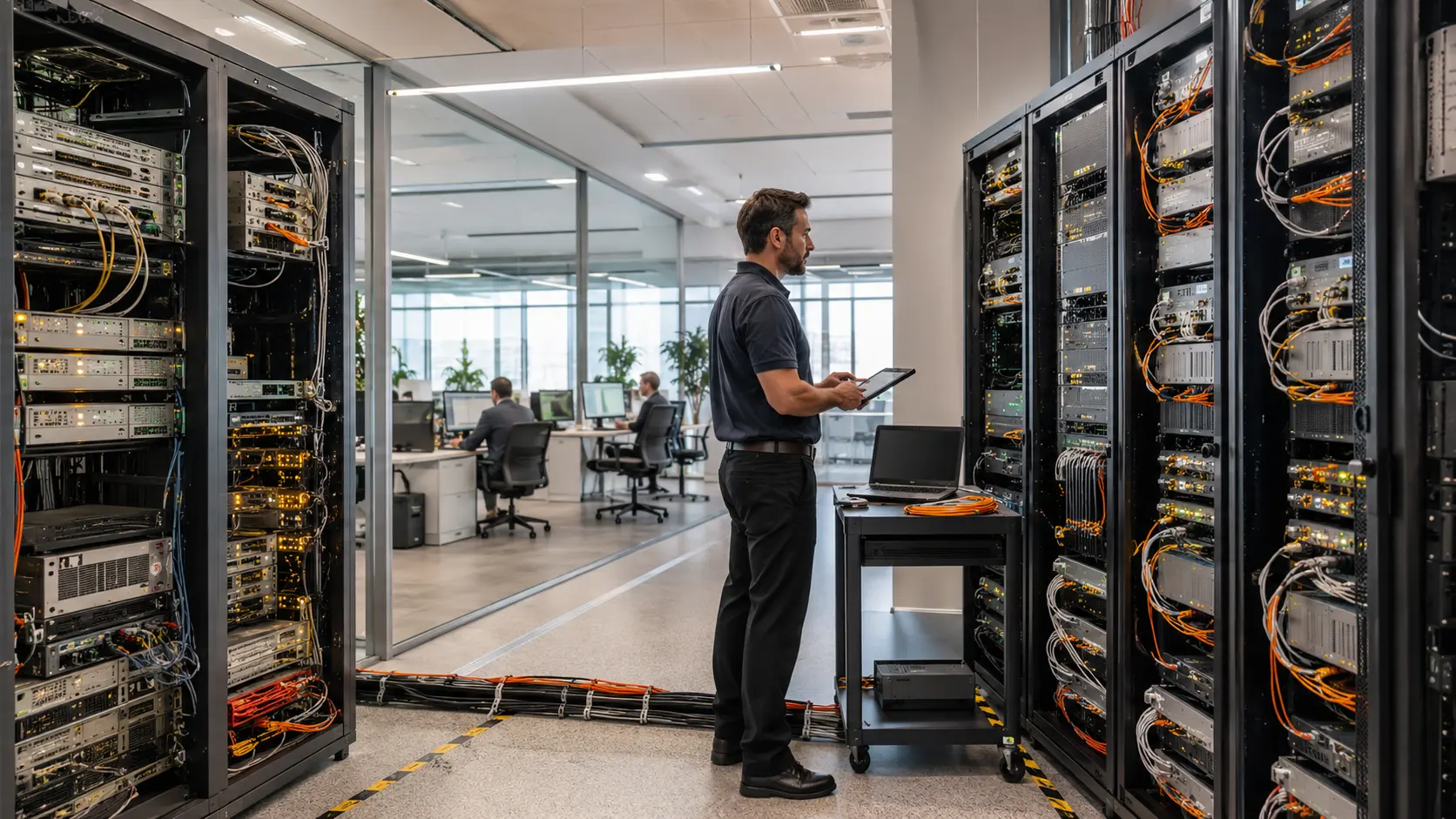
Known dependencies and risksA tested transition planValidation and fallback
WHEN THIS SERVICE MAKES SENSE
When the destination is clear but transition dependencies and risk are not.
- A map of affected systems, data and integrations
- A test, transition, communication and rollback plan
- Post-transition validation and an open-action list
Before starting: Before proposal, we need the source and target platforms, data volume, dependencies, acceptable interruption and internal availability.
Platforms, data, integrations, testing, cutover and stabilisation defined in the project proposal.
Application redesign, data cleansing and third-party work are separate unless agreed.
Business validation, available system owners and decisions at agreed project gates.
WHAT YOU GET
A controlled migration from dependency map to stabilisation.
Dependency analysis
Systems, data, integrations, users and details that must not be overlooked.
Migration plan
Phases, timing, ownership, tests, communication and acceptable downtime.
Transfer and validation
Controlled transition with functional, performance and data-integrity checks.
Fallback and stabilisation
Pre-defined rollback and enhanced monitoring after transition.
HOW WE START
We run migrations through preparation, rehearsal and controlled transition.
The scenario, test and rollback plan are agreed before production changes.
Map dependencies
We identify what moves, what remains and how systems communicate.
Test the scenario
We verify the sequence, timing, data, integrations and fallback plan.
Transition and stabilise
Controlled execution, validation and enhanced post-migration monitoring.
PROJECT ENGAGEMENT
This service does not use a standard monthly package.
The proposal follows the actual goal, dependencies, risk and acceptance criteria.
01Goal and scope02Phases and owners03Timeline and proposal
Describe the project →MIGRATIONS · INITIAL ASSESSMENT
Turn a planned migration into a workable transition scenario.
Share the source and target platforms, deadline and most important business dependencies.
“Positive provides additional specialist support for critical infrastructure, data, planning, continuous support and stronger security policies.”
LPO d.o.o. AdaLaslo Sekač i Emil Harnuš · IT System Administrators
See comparable references →FREQUENTLY ASKED QUESTIONS
What to clarify before a migration begins.
01Does migration always require downtime?+
Not always. Acceptable downtime, phased transition and synchronisation are defined according to dependencies and business risk.
02Do you prepare a fallback plan?+
Yes. For critical points we define the conditions, procedure and owners for fallback in advance.
03Do you handle cloud and on-premises migrations?+
Yes. The model depends on the source and target platform, data volume, integrations and availability requirements.
04What does the project proposal include?+
The proposal defines the goal, scope, phases, responsibilities, dependencies, acceptance criteria and commercial terms for the actual project.
05When can the timeline be confirmed?+
After the current state, dependencies, internal availability and acceptable interruption have been reviewed.
 IT infrastructure and cloud
CoreTech tim · 25 Sept 2026 · 7 min read
Cloud or on-premise: a decision matrix for your existing IT environment
A practical framework based on applications, data, risk, cost and team capability, instead of choosing whichever model currently sounds more modern.
Read article → IT infrastructure and cloud
CoreTech tim · 24 Sept 2026 · 6 min read
Modernising IT infrastructure without unnecessary business disruption
How to divide modernisation into controlled stages, verify dependencies and prepare rollback before a change reaches users.
Read article → IT infrastructure and cloud
CoreTech tim · 23 Sept 2026 · 6 min read
Hybrid cloud: an operating model, not only a technical architecture
A hybrid environment creates value only when identity, monitoring, security, cost and responsibilities are managed as one system.
Read article →