

 by Positive
- Cloud cost increases without a clear explanation.
- It is unclear who monitors performance, capacity and security changes.
- Problems are discovered only when users feel the impact.
09 · Operational cloud control
CloudOps: Keep cloud stable and scalable as the business grows.
CloudOps establishes an operating rhythm for resources, availability, performance, security and consumption. The environment is not reviewed only after cost or incidents become a problem.
Cloud capacity, risk and cost become visible and manageable.
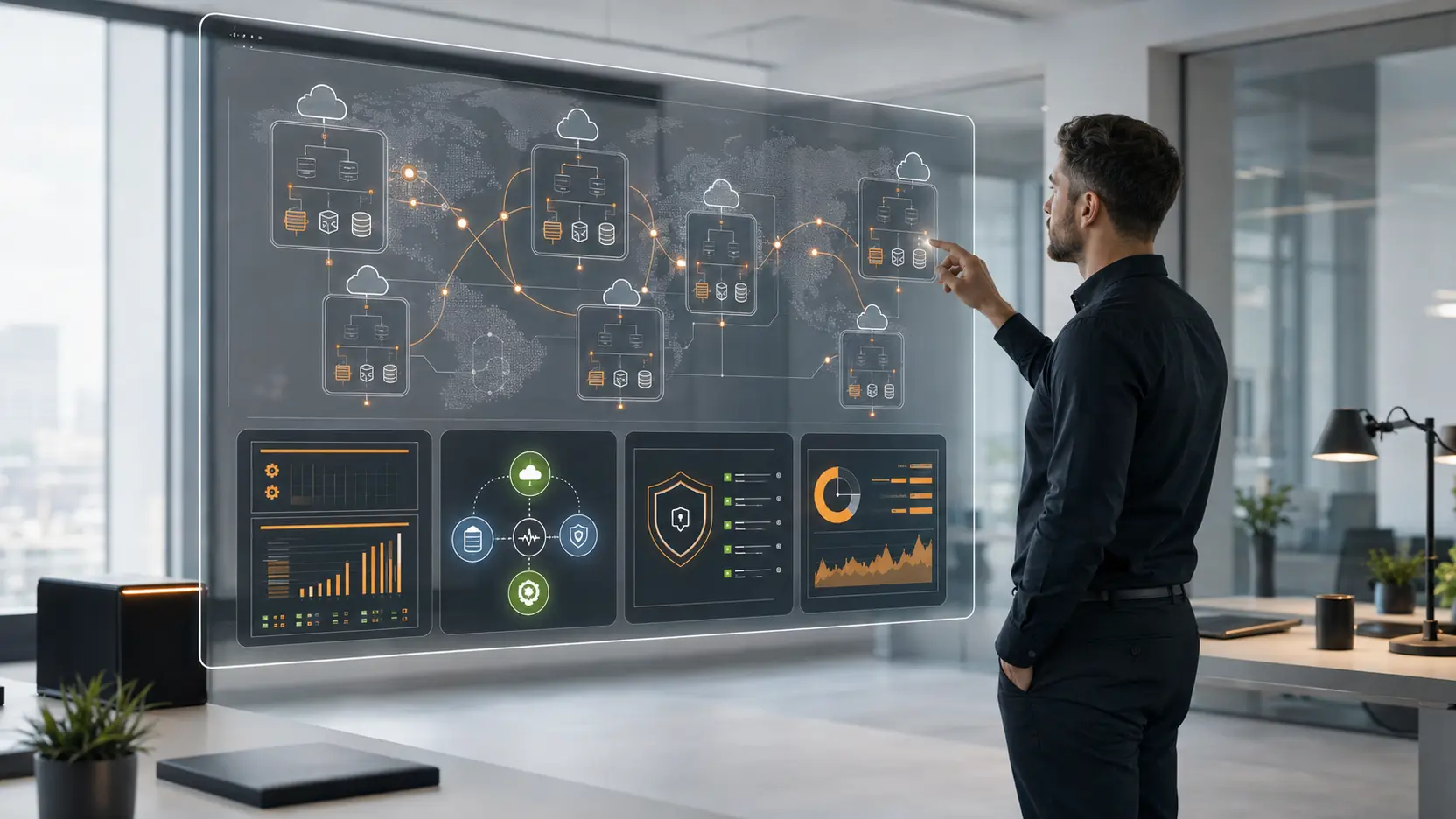
Visible consumption and capacityMore stable performanceControlled security and change
WHEN THIS SERVICE MAKES SENSE
When cloud works but cost, capacity or ownership are not visible enough.
- A view of resources, ownership, cost and critical services
- Thresholds, alerts and escalation rules
- An ongoing capacity, security and cost optimisation plan
Before starting: We do not promise savings before reviewing architecture and actual workload. Availability and ownership come first.
Accounts, resources, monitoring, changes, reporting and optimisation within the contracted scope.
Cloud consumption, application development and unmanaged third-party systems are not automatically included.
Account and cost owners, required access and service-availability priorities.
WHAT YOU GET
Operational control of cloud resources, availability and spend.
Monitoring and availability
Metrics, alerts, thresholds and escalation for critical services.
Performance and capacity
Workload, bottleneck and scaling monitoring.
Security and configuration
Control of access, change, configuration drift and exposure.
Cost optimisation
Review of consumption, unused resources and realistic savings opportunities.
ENGAGEMENT MODELS
Choose the CloudOps framework that is closest to your environment.
These are working frameworks, not a fixed proposal. Your team can update the exact inclusions, service hours and SLA after the environment review.
01Service scope02Support and escalation03Monitoring and reporting04Responsibilities and SLA
CloudOps
Choose a framework and open the details. We confirm the exact scope after reviewing the environment with you.
Lite
Cloud reviewBEST FORVisibility of resources, cost and the main operational risks.
- Resource inventory
- Essential monitoring
- Priority list
Additional scope
- Resource purpose and ownership review
- Obvious cost and security risks identified
- An action plan for the first corrections
Pro
Managed cloud operationsBEST FORMonitoring, maintenance and optimisation of an agreed cloud environment.
- Performance and availability
- Cost optimisation
- Operating procedures
Additional scope
- Change and escalation rules
- Periodic capacity and cost review
- Configuration and recommendations documented
Ultra
Automated cloud controlBEST FORSecurity, automation and continuity built into the operating model.
- Policy and automation
- Backup and continuity
- Advanced observability
Additional scope
- Controlled configuration management
- Technical signals linked to business impact
- Response and recovery plan for critical services
Enterprise
Cloud governanceBEST FORAn individual model for multiple accounts, platforms or business units.
- Multi-account model
- Shared standards
- Tailored governance
Additional scope
- Roles, ownership and security boundaries
- FinOps and technical governance in one rhythm
- Integration with internal processes and tools
HOW WE START
CloudOps moves from resource overview to continuous optimisation.
We establish ownership, thresholds and escalation before capacity and cost recommendations.
Establish visibility
Resources, costs, performance, security and ownership.
Define thresholds
Metrics, alerts, escalation and permitted changes.
Optimise continuously
Regular review of cost, capacity, risk and upcoming improvements.
CLOUDOPS · INITIAL ASSESSMENT
Find where the cloud environment is losing visibility or control.
Share the platform, critical services and whether the main issue is cost, performance, availability or security.
“Positive provides additional specialist support for critical infrastructure, data, planning, continuous support and stronger security policies.”
LPO d.o.o. AdaLaslo Sekač i Emil Harnuš · IT System Administrators
See comparable references →FREQUENTLY ASKED QUESTIONS
What to clarify before introducing CloudOps.
01Is CloudOps only monitoring?+
No. Monitoring is one element. The service connects availability, performance, security, change, capacity and cost.
02Can you manage an existing cloud environment?+
Yes. We begin with a review of architecture, access, costs, critical services and current operating rules.
03Do you promise a lower cloud bill?+
Not before analysis. We identify realistic opportunities, but the outcome depends on architecture, workload and business requirements.
04How is the service package selected?+
We use the user count, locations, systems, support hours, monitoring, escalation and required SLA to select the closest framework. The final scope is confirmed after reviewing the environment.
05Can the service start with a smaller scope?+
Yes. We can begin with the users, systems or locations creating the most pressure and expand after the operating model is proven.
 IT infrastructure and cloud
CoreTech tim · 25 Sept 2026 · 7 min read
Cloud or on-premise: a decision matrix for your existing IT environment
A practical framework based on applications, data, risk, cost and team capability, instead of choosing whichever model currently sounds more modern.
Read article → IT infrastructure and cloud
CoreTech tim · 24 Sept 2026 · 6 min read
Modernising IT infrastructure without unnecessary business disruption
How to divide modernisation into controlled stages, verify dependencies and prepare rollback before a change reaches users.
Read article → IT infrastructure and cloud
CoreTech tim · 23 Sept 2026 · 6 min read
Hybrid cloud: an operating model, not only a technical architecture
A hybrid environment creates value only when identity, monitoring, security, cost and responsibilities are managed as one system.
Read article →